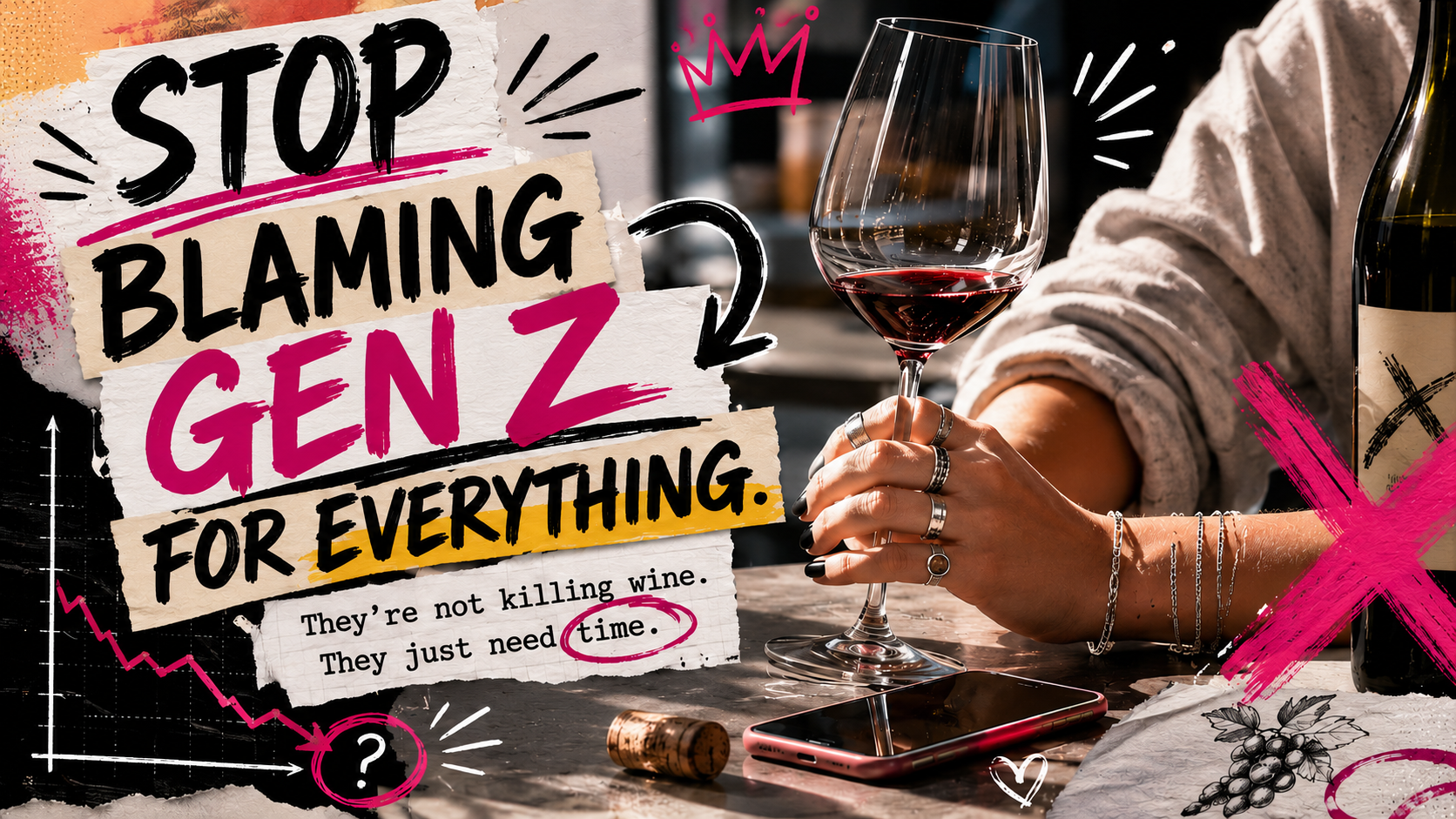
OPINION: STop blaming gen z for wine’s issues .
Stop blaming Gen Z for wine’s issues.
The wine industry has found its villain, and it's Gen Z.
Global wine consumption has dropped to its lowest levels since the 1960s. Some wineries are pouring unsold wine down the drain. Every new report seems to point the finger at Gen Z. But is the story really that simple?
The oldest member of Gen Z is currently about 29 years old. For many people, that's around the age when tastes begin to change—when tequila-fueled nights become less appealing and a great bottle of wine starts to make a lot more sense.
The youngest member of Gen Z is currently as young as 13 years old. In other words, when people say "Gen Z doesn't drink wine," they're including millions of people who aren't even old enough to order a drink.
Maybe it's time we stopped coming for Gen Z and started acknowledging that they're navigating a very different world than the generations who came before them.
Legalized marijuana. In 2010, the legal U.S. marijuana industry generated about $1.5 million in revenue—just 15 years later, that number is expected to exceed more than $50 million, about a 37-fold increase, representing one of the fastest-growing consumer industries in America.
Just 10 years ago, White Claw debuted in the hard seltzer category, and we all know what happened next. White Claw’s revenue exploded—from $154.8 million in 2018 to $627.2 million in 2019, more than 4x growth in one year, and the brand became a cultural phenomenon fueled by memes, social media, and shortages.
The rise gave way to other popular brands like High Noon, which saw sales grow 300% in 2020-2021, cementing it as the best-selling spirits brand by volume in the U.S., overtaking monstrous brands like Tito’s Vodka. Gen Z didn’t abandon alcohol—they changed the way they drink it.
The ripple effects of the pandemic are still being felt. Social habits changed, and many consumers haven't fully returned to the restaurants, bars, and gatherings that once fueled alcohol sales.
Gen Z doesn't need a lecture about wine. They need time to discover it. And the wine industry needs to ask itself a different question: Is it speaking to the next generation, or simply expecting the next generation to speak its language?
Gen Z isn't the problem. The world has changed—and the wine industry has to change with it.