their wine brings all the girls to the yard: meghan zobeck & the incredible ladies of opus one
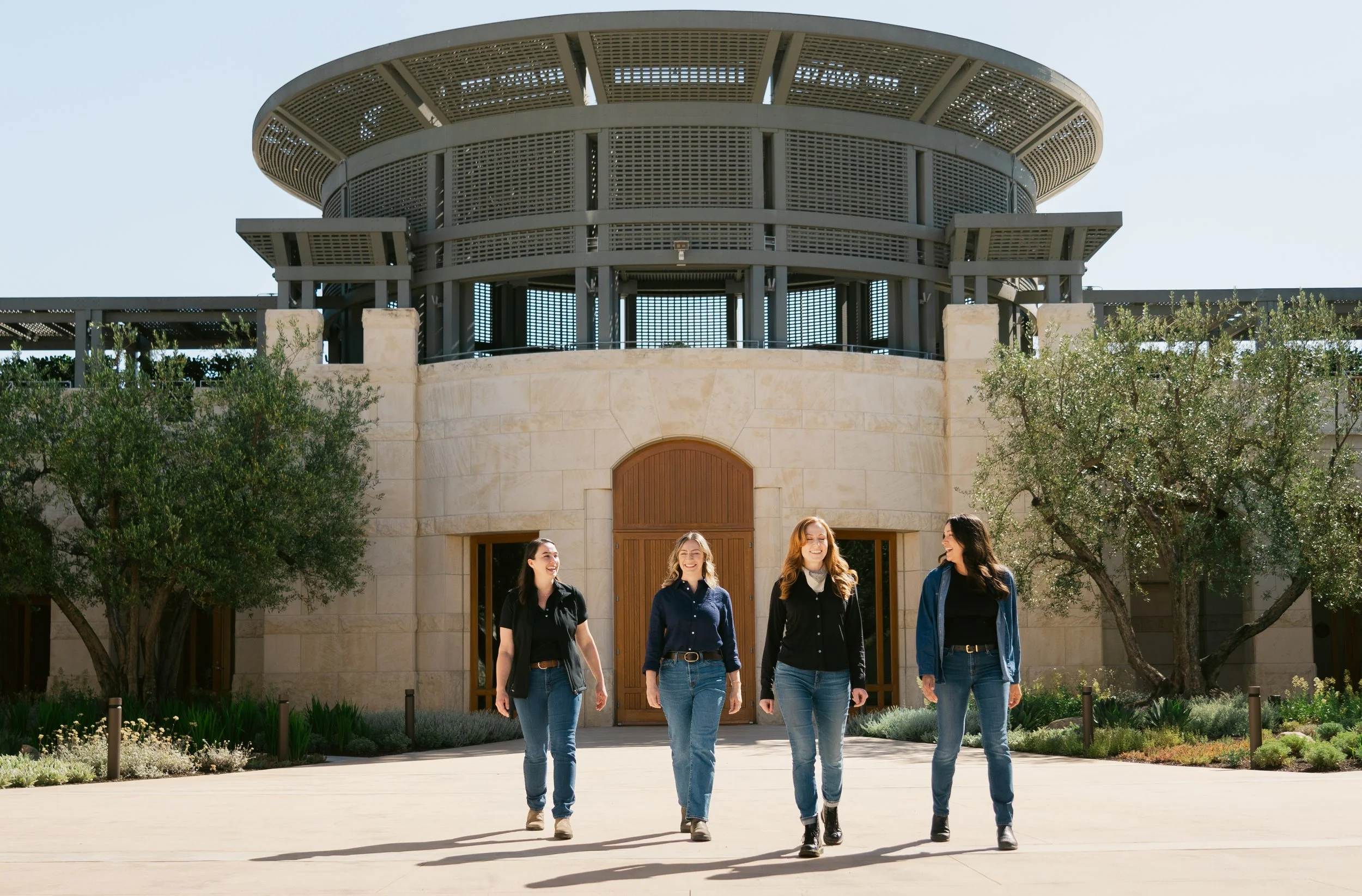
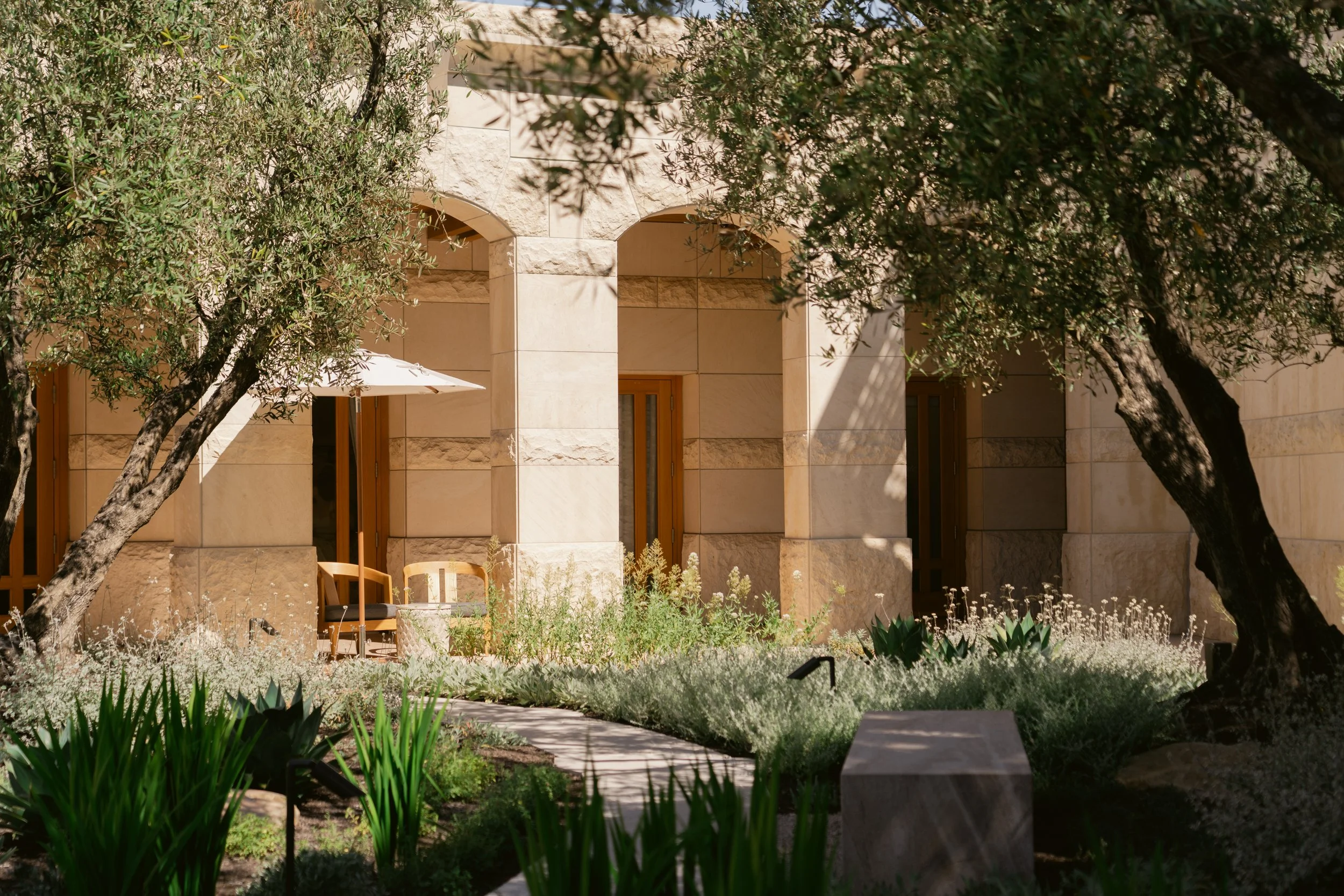
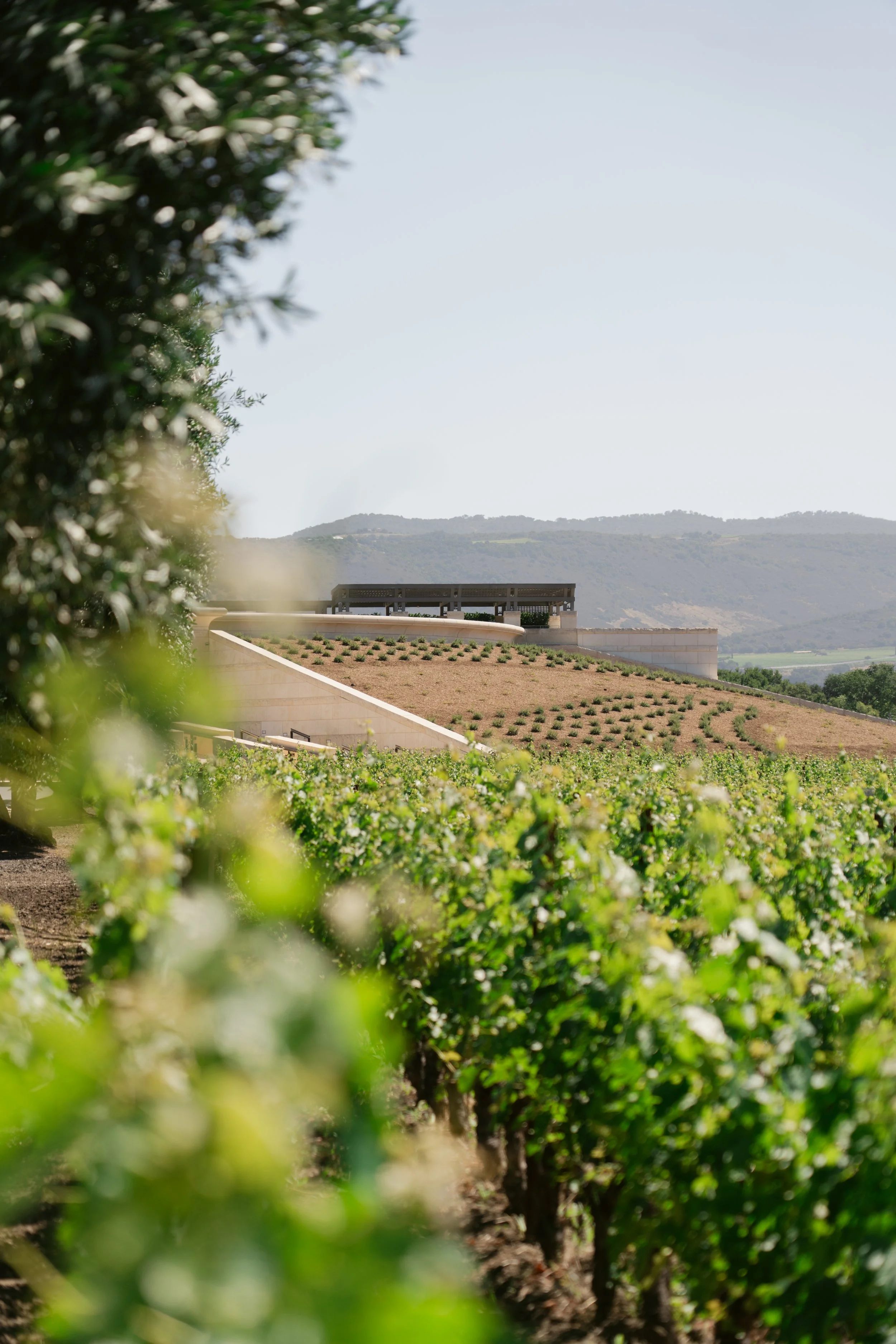
No, your GPS isn’t wrong. You’re exactly where you’re supposed to be. You’ve just arrived at Opus One Winery in Napa, California, but as you enter, it feels more like you’ve just arrived in Tuscany. The massive limestone columns on the statuesque 58,000-square-foot property could’ve easily been imported from a Roman villa estate. Open the enormous wooden doors and you’re greeted by an employee at the front desk who is polished and friendly, seems like he genuinely loves his job, and you can feel that. It doesn’t feel intimidating; there are smiles aplenty, and everyone is warm and welcoming.
In this building, one of the most famous wines on planet Earth is made. 12 miles north of Napa, Opus One sits in the heart of Oakville, about a 90-minute drive from San Francisco. Home to the millionaire’s row of the most iconic wineries in the U.S., including Robert Mondavi Winery and Screaming Eagle, if Napa Valley had an all-star game for wine, the starters would all be from Oakville.
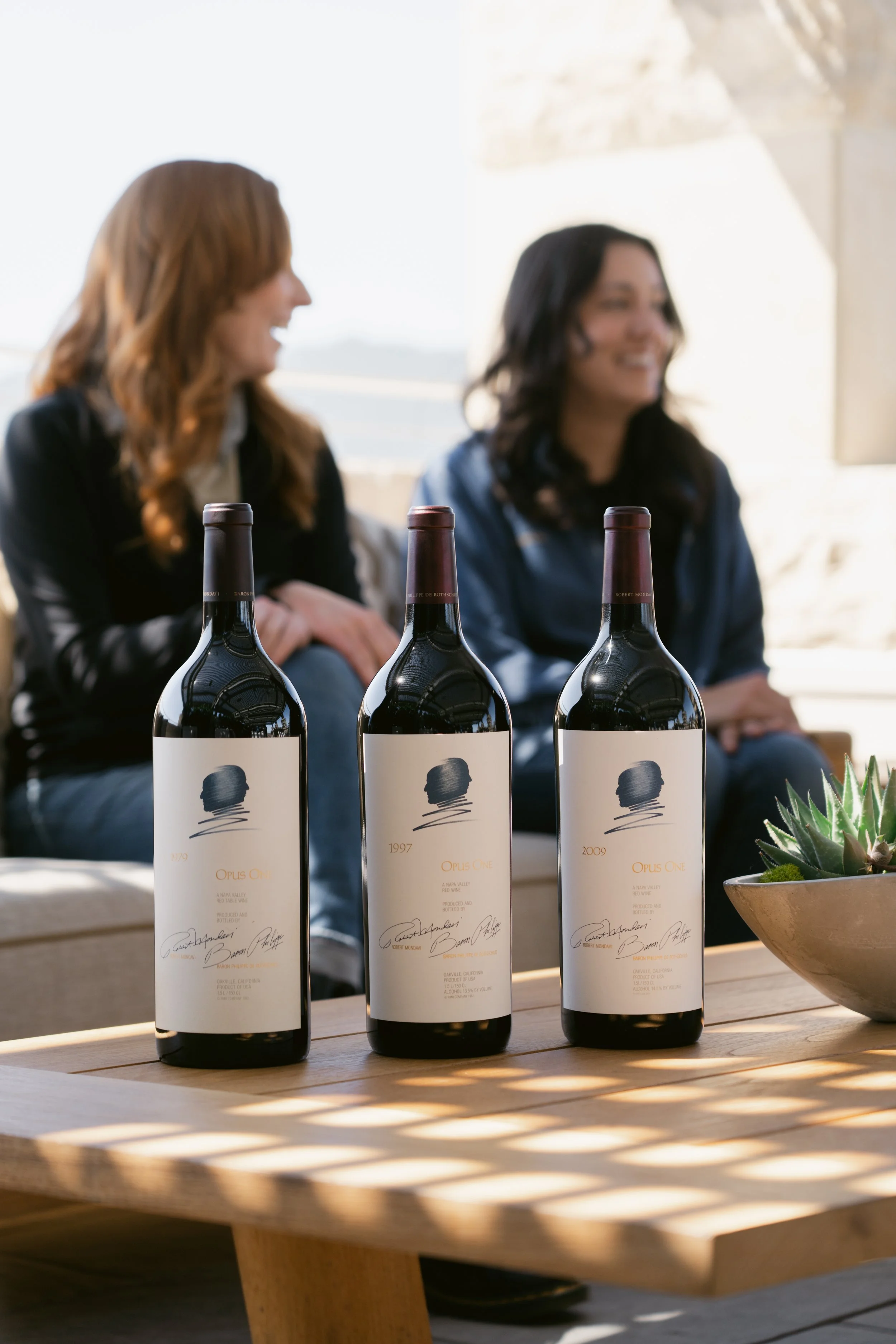
If BMW is the ultimate driving machine, Opus One is the wine equivalent. They do one thing, and they do it well; a Bordeaux-style blended wine built primarily around Cabernet Sauvignon. In pop culture, Opus One wines are treated like a piece of art just as much as they’re treated like a beverage. In song, you can hear it referenced in Jay-Z lyrics: “winding dirt roads on mopeds, spilling Opus.”
Down the picturesque winding spiral staircase, inside the underground Reserve Library on the bottom floor, sits Meghan Zobeck. Her chair overlooks the Grand Chai, a chilly room with about 1,000 French Oak barrels arranged side-by-side, all containing components of a future Opus One blend. She’s clad in her signature bandana, and her deep red hair is eye-catching.
“I love wine,” she says. “You can walk into a room with people you don’t know and if you’re sharing a bottle of wine, you walk out with friends, as cheesy as that might sound. You always have something to talk about if you’re sharing a bottle of wine together.”
And the bandana? She says it’s both the utility and the style- useful in the vineyard but also an extension of her personality. “Life is too short to be boring,” she says.
Meghan is the co-captain of the all-star team at Opus One along with winemaker Michael Silacci, who’s been with the company since 2001. Last year, Meghan was appointed as the first woman to lead winemaking operations at Opus One. Among other things, she says she was heavily drawn to working there in large part because of Silacci and his open-minded nature.
“Michael’s been here for 25 years, and has such deep experience in this place, which is pretty special,” she says. “He does a great job of leaving space for new ideas and innovation.”
Opus One has existed since 1978, founded by Baron Philippe de Rothschild of Chateau Mouton Rothschild in Bordeaux, who is basically European wine royalty, and the Godfather of Napa Valley wine, Robert Mondavi.
“Opus One has a very established reputation, and it’s fascinating to me that this winery is so open to innovation,” she says. “The fact that we’re so curious I think is a really positive, healthy thing.”
Innovation and community are woven into the fabric of Opus One—values that not only fuel Zobeck's passion for winemaking, but have shaped her journey for years.
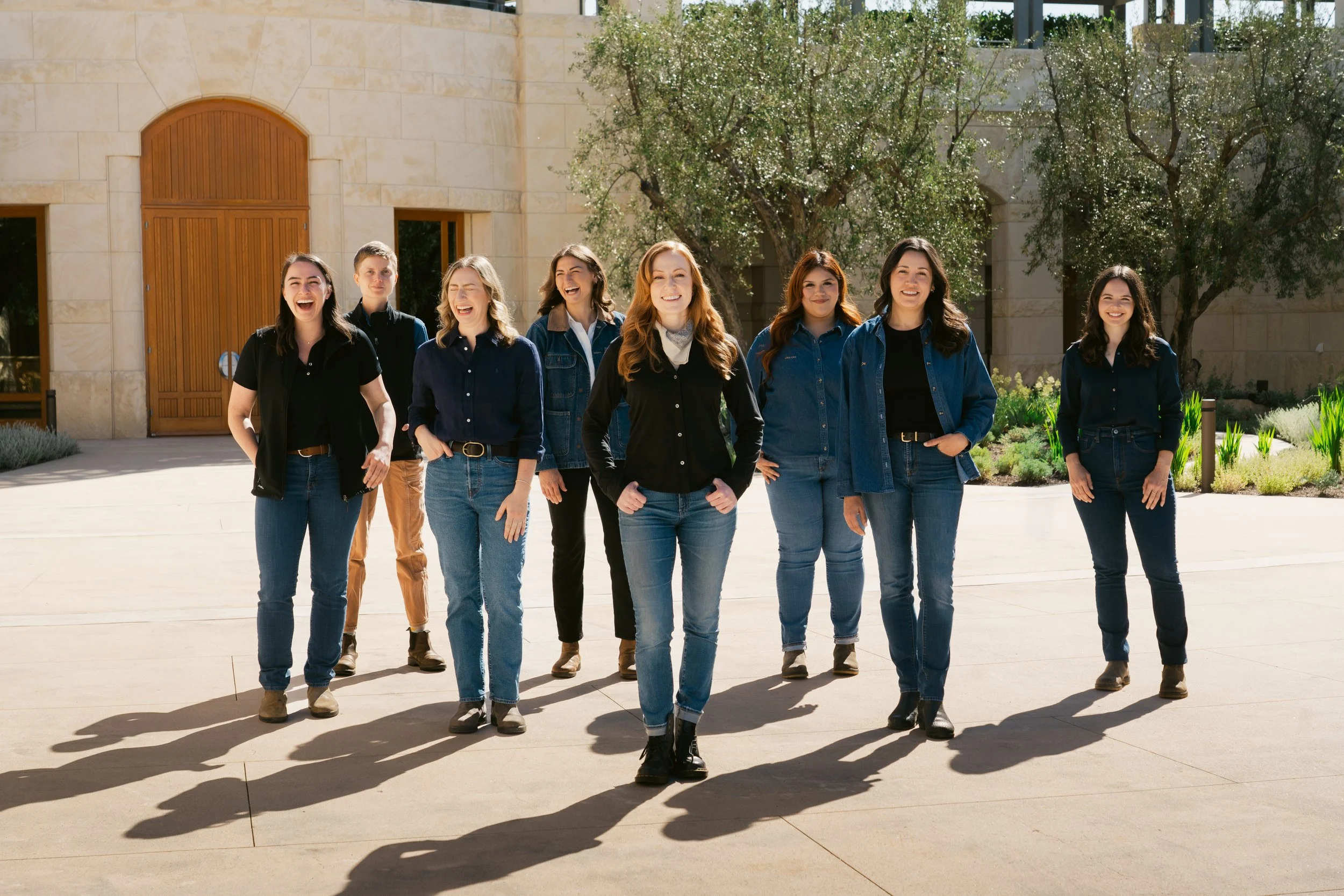
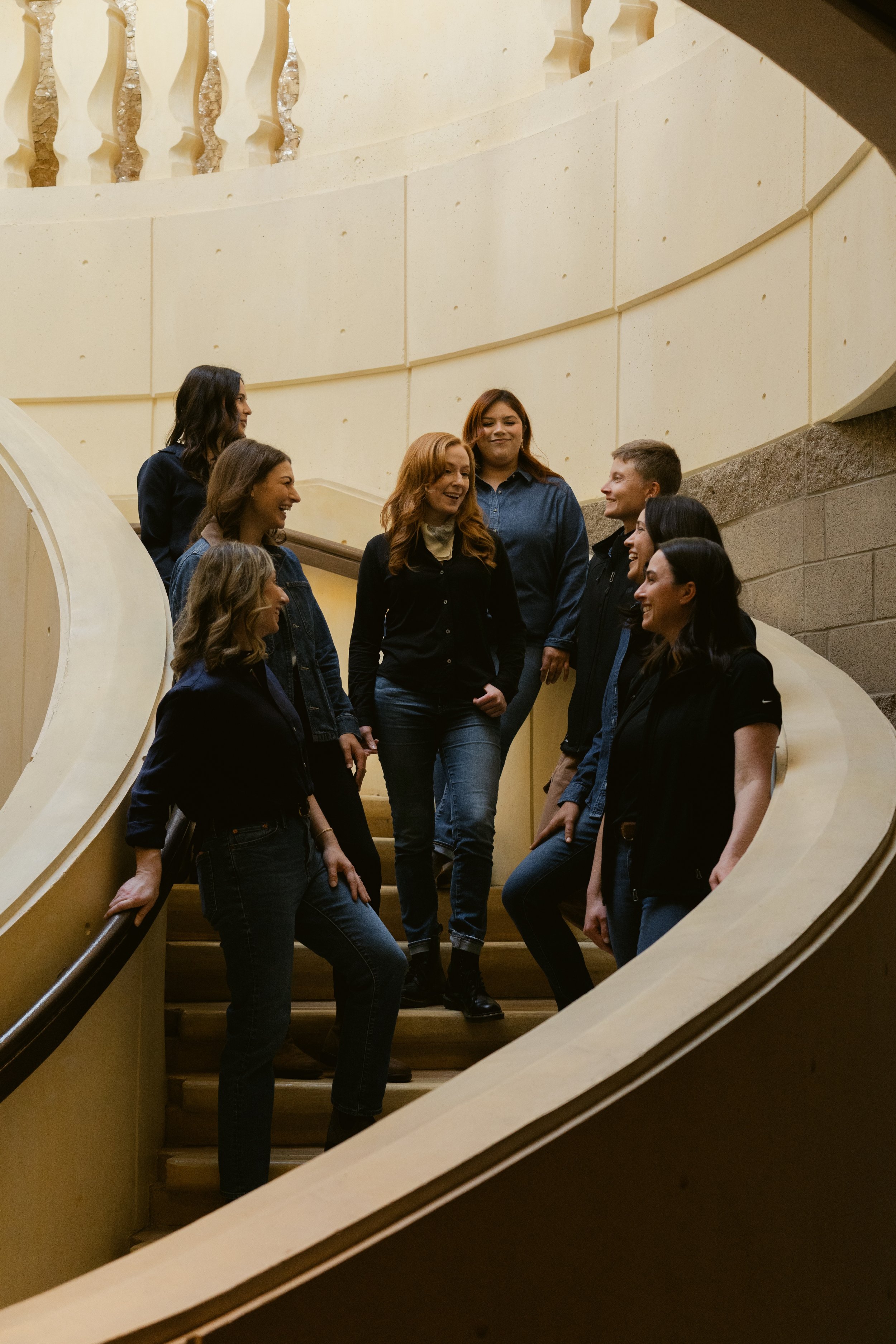
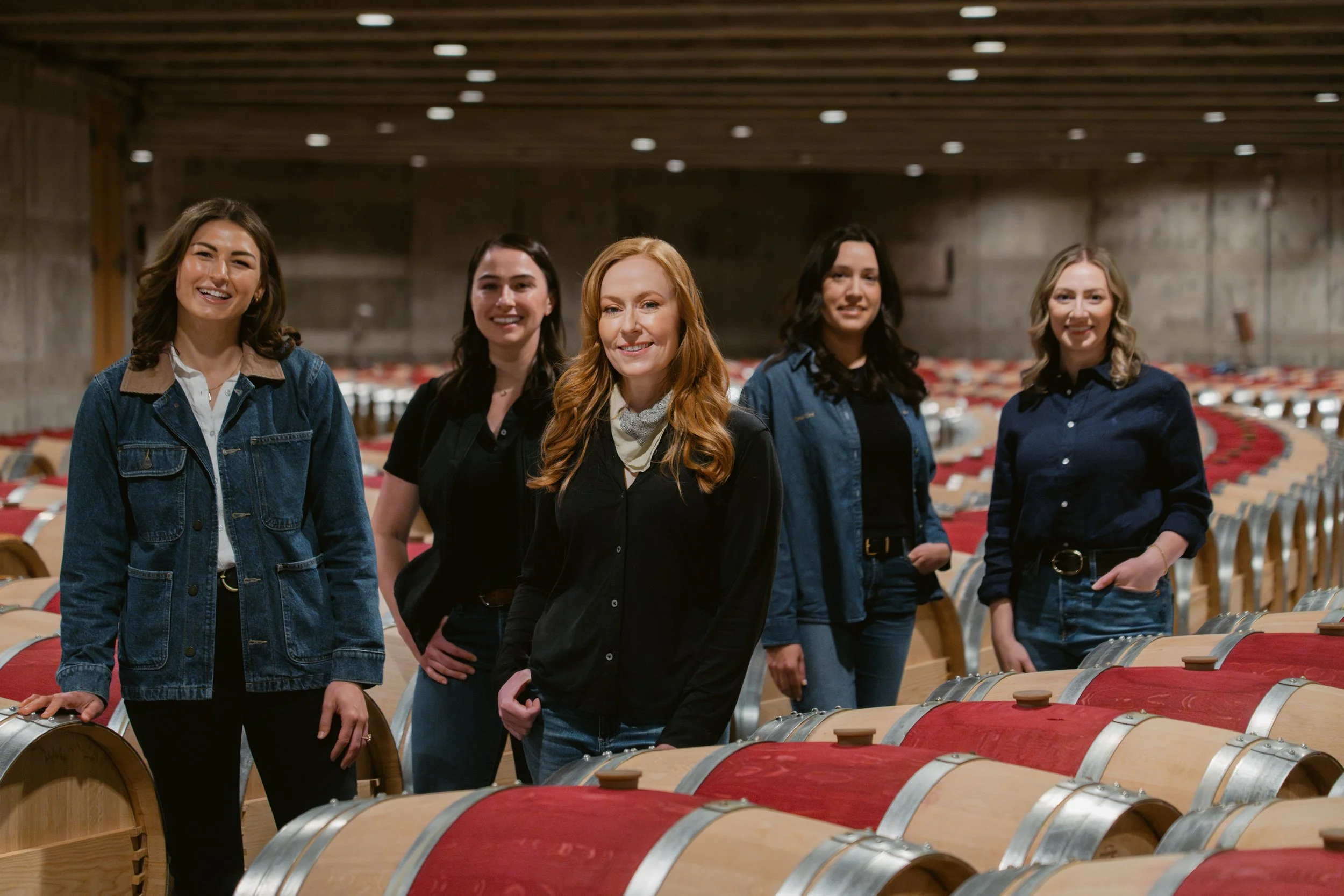
“There aren’t any egos,” says Zobeck. Pictured, left to right: Angela Vavricka, Kathleen Kanaley, Natalie O’Kelley, Kimberlee Marinelli, Meghan Zobeck, Mirka Garcia Alonzo, Alaina Velasquez, and Haley Nagy.
Photo: Evan Roscoe
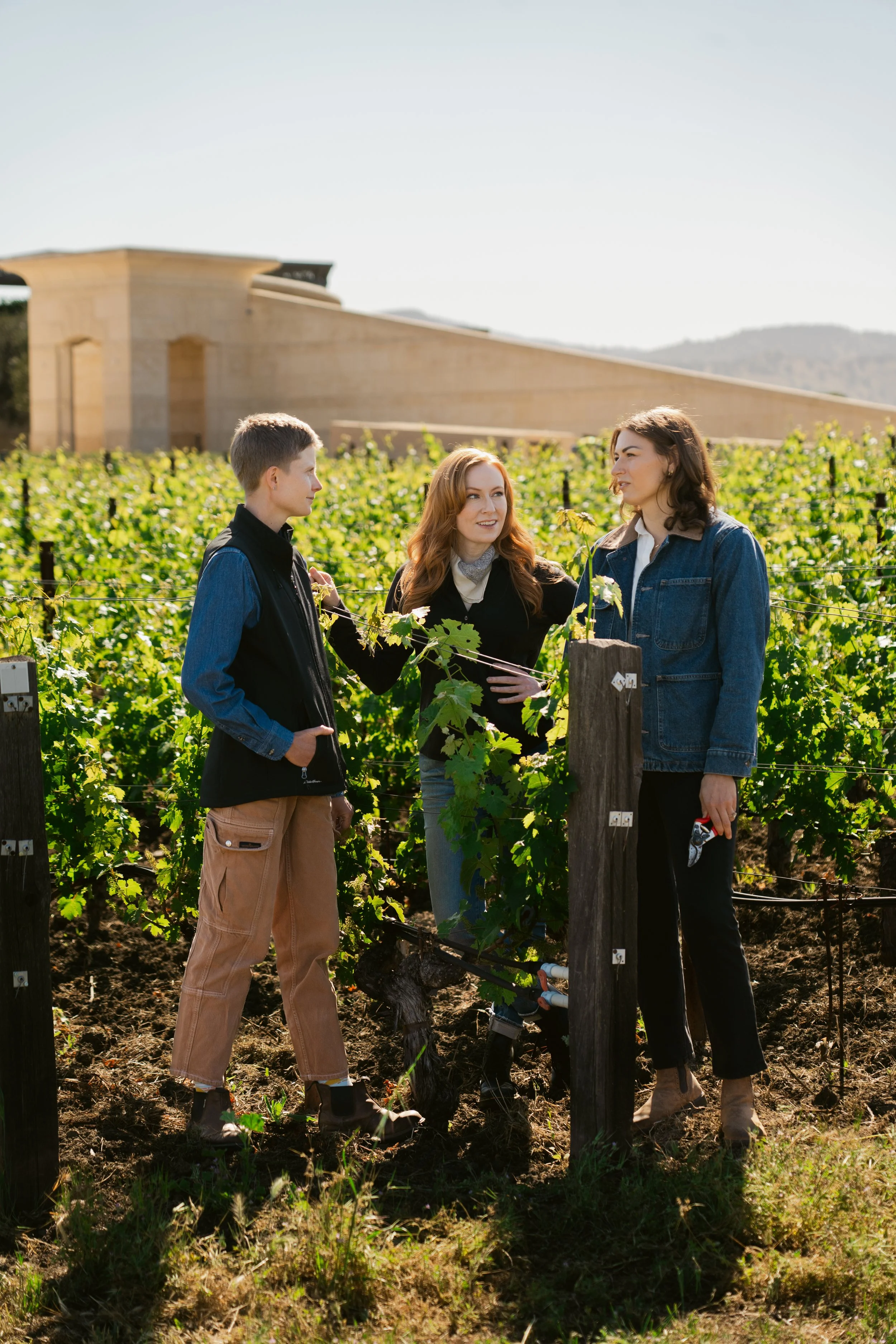
Comedy Central’s South Park once dubbed Meghan’s hometown of Greeley, Colorado as “the exact opposite of Hawaii.” Sick burn. About an hour north of Denver, Greeley is known as a working-class agricultural farm town that is also surprisingly the same city where Joseph Phelps, another Napa Valley icon, was raised. Phelps owned the largest construction company in Greeley and built many of the buildings that there exist today.
“My town was a cow town, and growing up I kind of raged against everything,” Zobeck says. “So, I became a vegetarian, and I was listening to rap music when everyone else was listening to country.”
During Zobeck’s high school years, the NFL’s Denver Broncos held their summer training camp in Greeley at the nearby University of Northern Colorado. While still in high school, she earned an internship working for the Broncos, a position that continued through high school and into her early years attending University of Colorado at Boulder.
She enrolled in the pre-med program with the intention of one day becoming a doctor, and also became a student athletic trainer for the collegiate football team. This job, she hoped, would give her exposure to doctors whose brains she could pick while studying. After graduating from CU Boulder, she planned to take a year off to study for her MCAT exam and also continue working for the Broncos. Her boss at the time, noting her stellar work, wanted to keep her with the organization and pitched her a new challenge to entice her to stay full-time. He offered to train her to negotiate player contracts. If she accepted, she would become the first woman in Broncos history to ever do so.
Having recently been talked out of continuing with medical school, she found the timing of the opportunity hard to ignore. “At the time, I didn’t know any other women that were negotiating contracts,” she said.
“And so yes, actually, I would definitely stay for that.”
As Zobeck climbed the ranks of the Broncos front office, she was quietly making history along the way—including becoming the first woman to even be included in a team photo.
“I loved the team aspect of it, I loved how driven everybody was, I loved that we were competitive together,” she says. “You’re pushing each other to be better in a way that’s so invigorating.”
During her time with the organization, she worked with a litany of high profile coaches—Mike Shanahan, who delivered 2 Super Bowl titles to the Broncos, and during training camps, his son Kyle, who is the current head coach of the San Francisco 49ers. Also, Klint Kubiak, who is the current head coach of the Las Vegas Raiders, and Mike McDaniel, former head coach of the Miami Dolphins.
The grueling work schedule simply came with the job. “Working 100 hour workweeks, weekends, holidays, I didn’t even think twice about it,” she says. “We’re all doing this. I’m like, this is what we do”.
During one offseason, she needed a quick break and went on a trip to Santa Barbara, California with friends to do some wine tasting. During visits to various wineries, conversations with the winemakers pouring their wines sparked a curiosity she hadn't anticipated.
“I just started asking questions, because I knew nothing about the process of winemaking, though I had a pretty solid science background,” she says.
What also struck her about the winemakers were their diverse backgrounds. “It was intriguing to me that most of the winemakers had traveled the world, some of them had changed careers, and I thought, this is really fascinating,” she says.
Upon returning home, she found something of interest in the Denver magazine 5280. “There was an advertisement in the back for a retail shop that also had a wine component,” she says. “They had winemaking kits, but you could also purchase fresh grapes during harvest, and use their equipment- it was a custom crush facility and they had a list of every variety of grape you could get by the state, in Oregon, California, and Colorado. And so, I signed up to get fresh fruit.”
Soon, Zobeck found herself routinely showing up to the facility, buying the harvested grapes, and taking them home in bins where she would crush the grapes and ferment the juice. Needing the proper tools, she bought equipment to mash the grapes and stir the fermenting juice, and she’d bring the juice back to the facility and use the lab to run samples on early versions of her wines.
“I basically had a mini winery setup in my basement, because I really wanted to know how to do this, and they had classes as well,” she says. “And fortunately the internet is a great place to find information, so I bought books, and initially I was just making it in my basement. I was making quite a bit of wine.”
Her new curiosity for winemaking quickly turned into a passion. The innovation excited her, and the community aspect helped make it that much more rewarding.
“After 3 years of that, and noticing that all of my friends started getting into wine because of it was really fun,” she says. “People would come over to help me bottle, and it would end in dinner parties, and it was so much fun. It created community and I loved that.”
By then, her summer routine had become firmly established. Every summer, anytime between the NFL draft and training camp, when Zobeck had time off, she was taking vacations to different wine regions.
“That’s still how I vacation (smiles).”
Due to the organizational structure at the time, Zobeck began realizing that her upward mobility in the Broncos front office may be limited, and before long, she found herself looking for internships at wineries abroad to follow her new passion.
But when a new opportunity emerged in the Broncos front office, she suddenly found herself at a crossroads. “I feel like that was the universe asking “how badly do you want this?” she says.
“It was a hard decision for me because I was one of the only women doing the job, and it was really hard to earn that space and be taken seriously,” she says. As she recalls that moment, she wrestled with one important question: Could she live with never knowing where a career in wine might have led?
“I had always wanted to travel and experience different cultures and countries,” she says. So, she resigned from her position with the Broncos and set off to Chile for her first wine internship.
“I don’t regret a thing,” she says. “I love the wine industry.”

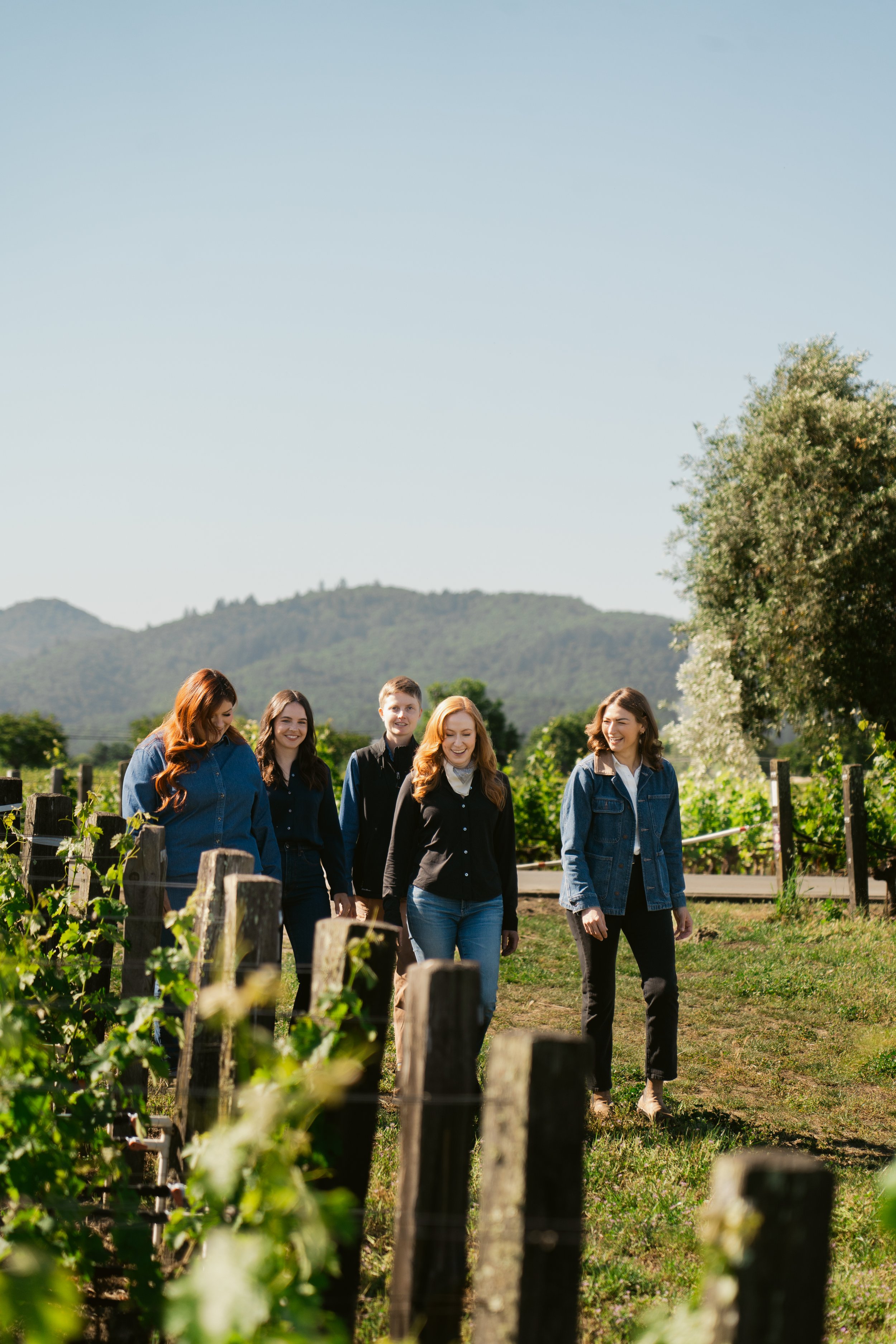
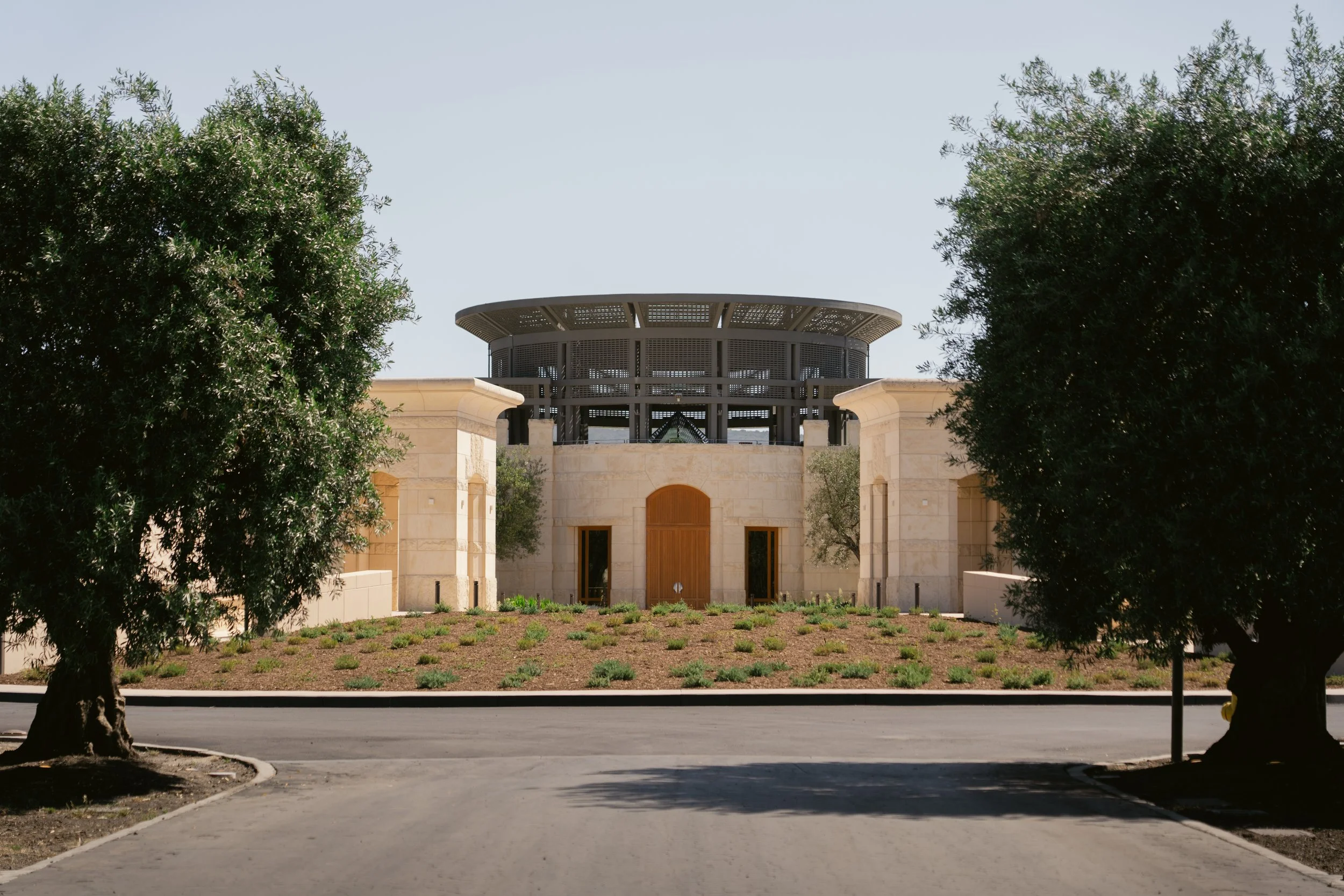
You don’t need glasses to see that this iteration of winemakers at Opus One are pretty much all female—some tenured as little as 7 months, others as long as 10 years. The aforementioned Michael Silacci is the only male.
“I think its unique, but you’re seeing it more and more,” Zobeck says. “We have a very female dominated team, and we work so well together. It just makes it really fun. Our communication is incredible, and we build off of each other’s ideas.”
That sense of community surfaces again—an environment Meghan relishes.
“There aren’t any egos, which particularly makes everything very enjoyable, but it also encourages you to bring more ideas to the table,” she says. “I think more so than any other winery I’ve ever been to, it’s really a team process, which I think is unique here and it’s also really incredible because everyone has different experiences and brings something different to the table, so it’s really stimulating to make wine as a group. The team aspect is really front and center.”
Opus One is not a cheap wine. Whereas a typical high-end Napa Cabernet sits at an average price of $225 per bottle, the current vintage of Opus One sits at a $490 retail price, firmly within Napa’s ultra-luxury tier alongside names such as Screaming Eagle, Harlan Estate, Scarecrow, and Bond.
Tastings at Opus One require a reservation beforehand, which can be booked online, and range from $150 for the salon tasting of 3 different wines, to $250 for the longer tasting experience that includes canapés. For the ultimate visit, the ‘Art of the Table’ experience offers a detailed tour, followed by a seasonal 4-course meal, with an Executive Chef-curated wine pairing of different vintages of Opus One, for $793.
For many people, the question comes down to one thing: Is it worth the price? That answer begins in the glass, where the liquid silkiness of the wine begins to reveal itself. The answer becomes even clearer when you realize that decades from now, that same bottle is very likely to still be delivering an extraordinary experience.
Most wine is built for the near future, not the long one. Wine educators commonly estimate that 90-95% of all wine is meant to be consumed within 1-5 years, while less than 1% can evolve gracefully for 20+ years. That is part of what makes Opus One unique. In a world of bottles made for the moment, Opus One is built for the milestone — the graduation, the wedding, the first home, the occasion that’s still years away but already worth saving for.
Opus One is intricate when it comes to wine production. We asked Zobeck to elaborate.
“First, people are a primary focus in everything we do,” she says. “People are put first whether that’s in the vineyard, the winery, guest relations—it’s everywhere in the company. We also run several pretty incredible research trials in the vineyard, and share that information with the community, UC Davis, and with different viticulture and enology programs. Our farming practices are regenerative now, and we put a lot of time and effort into the vineyard. We’ve been farming organically since 2010, certified organic since 2021. We don’t cut corners.”
Organic certification prevents winemakers from using synthetic pesticides, herbicides, and fertilizers. Opus One will also soon be regenerative organic certified, a relatively new wine operations standard that also focuses on worker welfare and social fairness, including a labor practices review.
“It incorporates the human element which I love, because a lot of farming certifications don’t actually have any policies regarding the treatment of the people that are working in the vineyards, which is kind of wild,” she says. “So instead of only saying you’re not spraying chemicals or you’re not tilling, you’re considering the human element of why you aren’t doing those things and how they impact your vineyard team. Everything we do is with quality in mind, which includes how our team is cared for. And our team cares a great deal about the work they do. We’re incredibly detail-oriented in the cellar, in the vineyard, and everything we do has a lot of intention.”
At the time of writing, Opus One had just purchased a new property on Atlas Peak in the nearby Vaca Mountains. “We’re researching the site, investigating the soils, mapping the waterways, mapping the wildlife corridors, so everything we do is kind of above and beyond and we think that also translates to the quality,” she says.
Can Zobeck herself taste the difference between a good wine and a great wine? She thinks so.
“I notice a difference in wines that have responsible farming practices or that are very dedicated to their farming practices vs not, and think you can taste that in the glass,” she says. “I think even if you taste blind, you will taste that in the glass. It makes sense that vines that are better cared for produce better fruit, and that translates into the wine.”
“To me, when you’re tasting fruit and when you’re tasting wine, it’s kind of the same thing,” she says. “Prior to harvest you’re out there tasting everyday, you’re tasting the grapes, you’re walking through the vineyards. It’s hard to pinpoint but there’s this beautiful, delicate complexity, and then this energy, which is hard to translate into words, but the fruit tastes like it’s alive, and you want to capture that, and you know that it’s going to dance on your palate too.”
“If you can capture that, then it usually creates a wine that feels the same, and to me, a good wine is the one that you smell, you sip, and you’re like ohhhhh,” she says. “And then you think, I’m going to sip this slowly because I want to keep coming back to it to enjoy it. But I think all of that starts in the vineyard for sure.”
“When I’m in San Francisco, I see wine on every table,” says Zobeck. “I think people are still curious and they’re wanting something that creates conversation and community and wine does such a great job of that.”
Photo: Evan Roscoe
A lot of media stories these days contain ‘doom and gloom’ news about the wine industry. Since Covid, global wine consumption has fallen nearly 12% to its lowest levels in more than 60 years, according to the International Organisation of Vine and Wine (OIV).
Zobeck is confident about the future of the industry.
“I think there are natural ebbs and flows and we’re kind of in an ebb right now,” she says. “It’s harder when you’re not reading about it but you’re actually experiencing it,” she says. “I think with 2020 being a year where everyone was at home doing comparatively more drinking, the industry saw a boom, and then we saw increased business based on a period of time that was temporary. Then it shifted back and kind of normalized in the direction it was before 2020, and that was painful for the industry.”
“When I’m in San Francisco I see wine on every table,” she says. “And I know some people have said the opposite but I’m like man, when I’m out traveling, people are still curious and they’re wanting something that creates conversation and community and wine does such a great job of that. I think we’re in kind of a normalizing phase.”
We asked her what’s a food pairing rule that she completely ignores when she dines out.
“That it always has to be steak with Cabernet,” she says. “I think there are some hard and fast safe rules, but I think you miss a lot with wine and food if you do the same thing every time, so I like to be experimental with pairings.”
We asked her to give us an example.
“There’s a really great Indian restaurant in San Francisco called Copra, and they do really cool pairings because a lot of people have a really hard time pairing things with a decent amount of spice,” she says. “I was poured a skin contact wine, but not orange, with high acid, and it had a little bit of body and some salty texture. It was dry and amazing. And I was like, this is why we cannot choose the same pairings every time. Their wine list is really great—their Wine Director, Andre, does a fantastic job of showing that you don’t have to pair a sweet Riesling with spicy food every time.”
She also sees a lot of trends in today’s wine culture that she loves. “I love the people that are sharing what they’re learning as they’re learning it, because it brings you in,” she says. “It humanizes it too, and it’s relatable and I love that.”
“I wasn’t really looking at Instagram when I was learning, and there’s so much information on Instagram and other platforms,” she says. “The visual aspects are really nice because they help with different learning styles, which I can appreciate because I’m a very visual learner. I love non-judgmental wine evaluations. There is something different for everyone, everyone has something that they’re into and I don’t love when new wine drinkers are told the “this is a bad wine, this is a good wine. Let them decide what they enjoy by exploring.”
She names Wine Folly as a standout wine resource. “I was looking at Madeline’s books before I got into the wine industry,” she says, referring to Madeline Puckette, one of Wine Folly’s co-founders. “The visuals are so good; she does an exceptional job of making everything digestible.”
Zobeck acknowledges that she felt a bit overwhelmed when she first discovered wine. “When I first started getting into wine it was intimidating because I felt like oh my gosh, how do you even choose a wine?” she says. “You also don’t want to ask a dumb question. But now people have access to so much information so they can feel more knowledgeable before going to ask for a wine. I do think that the everyday sommelier has changed as well, so the wine community is a little more aware of people feeling intimidated by wine, and they try to be more inclusive.”
“On the other end of the spectrum, I read an article the other day with the comment, “don’t assume that we don’t know about wine either,” she says. “So, there is a balance and I appreciate sommeliers for being able to walk that line. I think people are being more aware about bringing people into wine and hopefully that continues, but there’s also work to be done.”
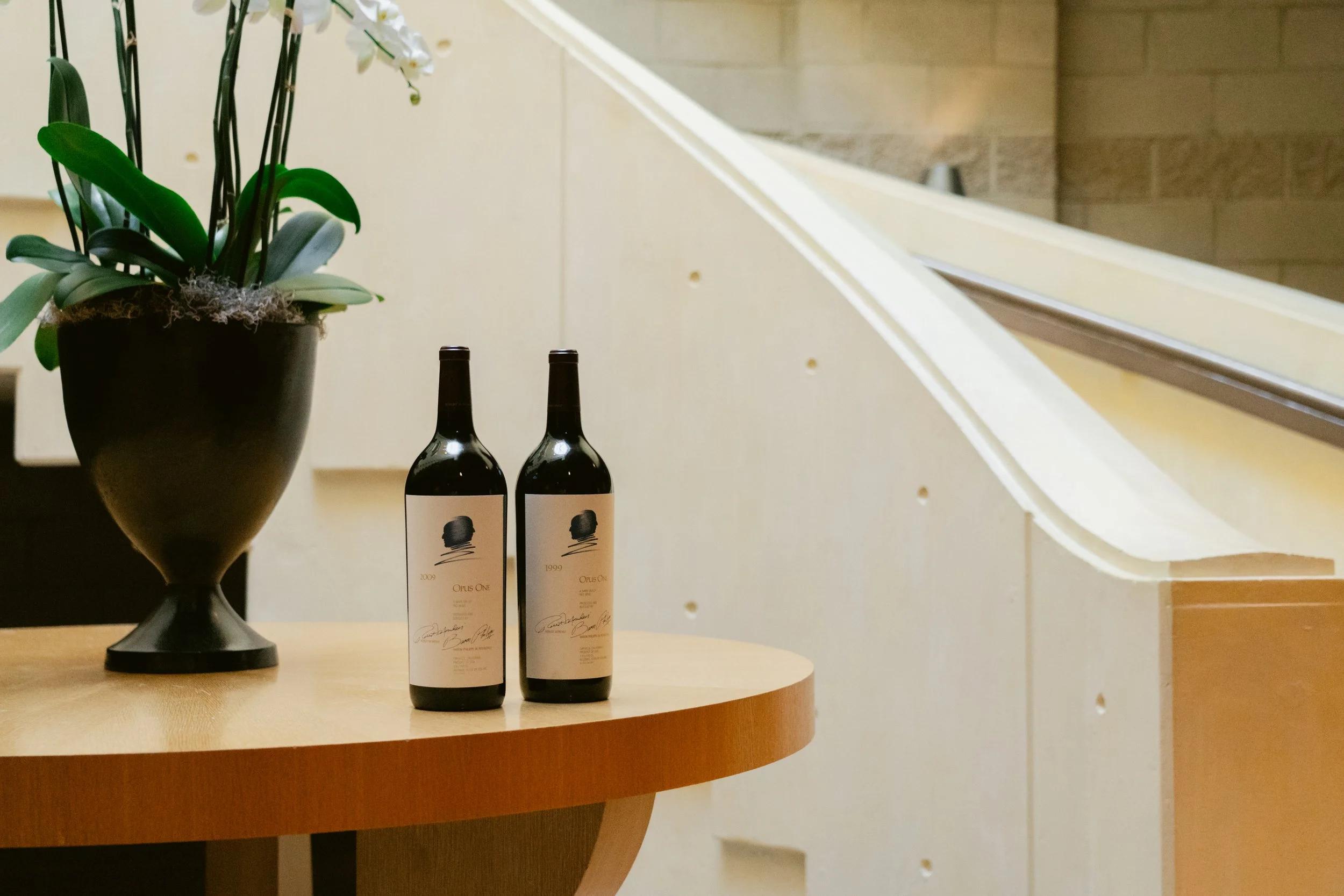
In pop culture, Opus One wines are treated like a piece of art just as much as they’re treated like a beverage. In song, you can hear it referenced in Jay-Z lyrics: “winding dirt roads on mopeds, spilling Opus.”
For those hoping to break into the wine industry, Zobeck believes one of the best places to begin is a local wine shop.
“I know winemakers that started in wine shops,” she says. “You get to see a little bit of everything—you get exposure to winemakers because they’ll pop into the shop and do tastings, but you also get exposure to the sales side of things, and you get to try several different wines which I think is incredible. If you are 100% positive you want to go into the production side of things, then a harvest internship is absolutely the only way. Certainly, you can go to school too, but even if you go to school, you’re still going to start with an internship. Some of the best advice I received, was that you might as well do the internship to see if you like it first.”
Zobeck says be wary of advice you may get from people along the way in your wine journey. “Don’t be afraid of taking risks and stay open minded,” she says. “I think a lot of people will give you advice based on their own fears. I would just encourage people to not be afraid to get into wine. It’s not as intimidating as it seems once you start getting into it, whether that’s making it or drinking it. Stay curious, stay open minded. And also, vote.”
Zobeck travels often. After our interview, she went to London to taste every wine Opus One has made since its inaugural vintage of 1979, all the way up to 2000- in what’s known as a vertical. So how did the unicorn 1979 Opus taste? “It was so alive, still showing a vibrant red fruit character that you don’t often see in a 47-year-old wine,” she says.
And is there any of the 1979 left? “Yes! Such a small amount,” she says.
Earlier this year, Meghan and two members of the international sales team at Opus One traveled to Singapore to teach a masterclass to the Singapore Sommelier Association. About 40 young, bright-eyed sommeliers packed into the class, with the Q&A portion being one of the highlights for Zobeck.
“It was fun for them to have a winemaker available to answer all of their nerdy wine questions,” she says. “To be able to ask the things that many people can be afraid to ask.”
Looking across the room at all the very curious sommeliers in the class gave Zobeck a ton of hope for the future of the wine industry. “I don’t think wine is going anywhere at all,” she says. “I’m so confident that wine is going to be in our lives because people need wine like they need community, and food.”
“And joy.”